
The Importance of Insurance Appraisals for Your Fine Art
Is Your Collection Properly Insured?
Many collectors assume their standard homeowners’ insurance policy fully protects their fine art collection. In reality, standard policies rarely cover the true value of unique cultural property.
A painting inherited decades ago, a mid-century sculpture purchased through a gallery in Birmingham, or a collection of heirloom antiques displayed in a Bloomfield Hills estate may have appreciated significantly over time. Without a current professional appraisal, blanket insurance coverage limits often fall far short of the actual capital required to replace the property after a catastrophic loss.
Throughout the Detroit metropolitan area, collectors frequently discover critical gaps in their coverage:
Lack of Legal Documentation: Missing critical provenance, high-resolution condition reports, and certified structural data can stall or invalidate insurance claims.
Limited Blanket Policy Caps: Standard policies cap payouts for unscheduled jewelry, fine art, and collectibles.
Outdated Scheduled Values: Line-item valuations established years ago leave the owner exposed to current market inflation.
What Is a Fine Art Insurance Appraisal?
A fine art insurance appraisal is a professional valuation prepared to determine the current replacement value of artwork for insurance coverage purposes.
This appraisal establishes what it would realistically cost to replace an item with another of similar age, quality, condition, authorship, and market desirability in the current retail marketplace.
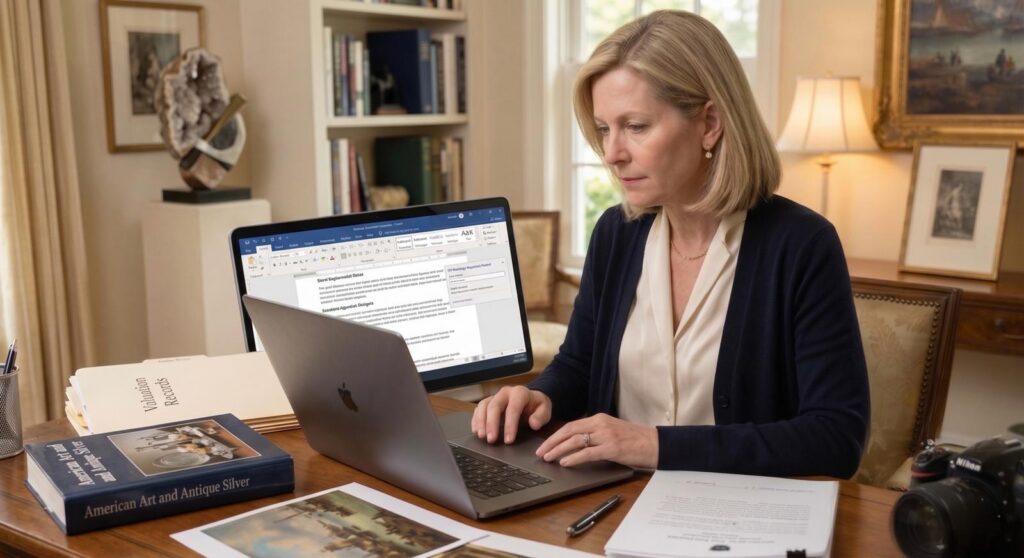
A proper appraisal also includes detailed documentation such as high-quality photographs, measurements, medium and materials, artist attribution, condition notes, market analysis, and provenance information when available.
Why Insurance Values Change Over Time
One of the biggest misconceptions among collectors is that art values remain stable.
The fine art market changes constantly. Over the past decade, certain categories have experienced dramatic value increases, while others have softened. Mid-century modern design continues to see strong demand in Michigan and nationally, while regional American painters connected to Detroit or the Midwest have gained renewed attention.
Institutions such as the Detroit Institute of Arts, Flint Institute of Arts, and Cranbrook Art Museum also influence regional collecting trends and awareness.
The Financial Risks of Being Underinsured
Underinsurance creates more than inconvenience. It creates exposure.
If a collection suffers damage or loss and values are outdated, the owner may receive compensation far below actual replacement value. This is especially important during fire or water damage claims, theft investigations, estate settlement, divorce proceedings, trust administration, and probate matters.
Many insurers also require updated appraisals every three to five years for higher-value collections.
Why Independent Appraisers Matter
At Heritage Appraisals, we are independent certified appraisers. We are not dealers and do not buy or sell property due to potential conflicts of interest.
That distinction matters. Independent appraisers provide objective, unbiased valuations developed through market research, professional methodology, and ethical standards.
For insurance companies, attorneys, trustees, and collectors, independence helps strengthen credibility and trust in the appraisal report.
ISA and USPAP Compliance
Professional credentials are important when selecting fine art appraisal experts.
Heritage Appraisals follows the professional standards established by the International Society of Appraisers (ISA) and USPAP, the Uniform Standards of Professional Appraisal Practice.
USPAP compliance helps ensure appraisal reports are ethical, consistent, properly researched, clearly documented, and defensible if challenged.
The Heritage Appraisals Process
Our methodology provides absolute thoroughness while maintaining an efficient, professional experience for the collector.
- Initial Consultation: Scope Assessment.
We discuss the size, scope, and specific objectives of your collection to determine the exact requirements for your insurance policy or estate plan.
2. Documentary Review: Provenance Gathering.
Our team reviews all existing receipts, invoices, certificates of authenticity, and past appraisal records to build a foundation for historical tracking.
3. On-Site Examination: Physical Inspection.
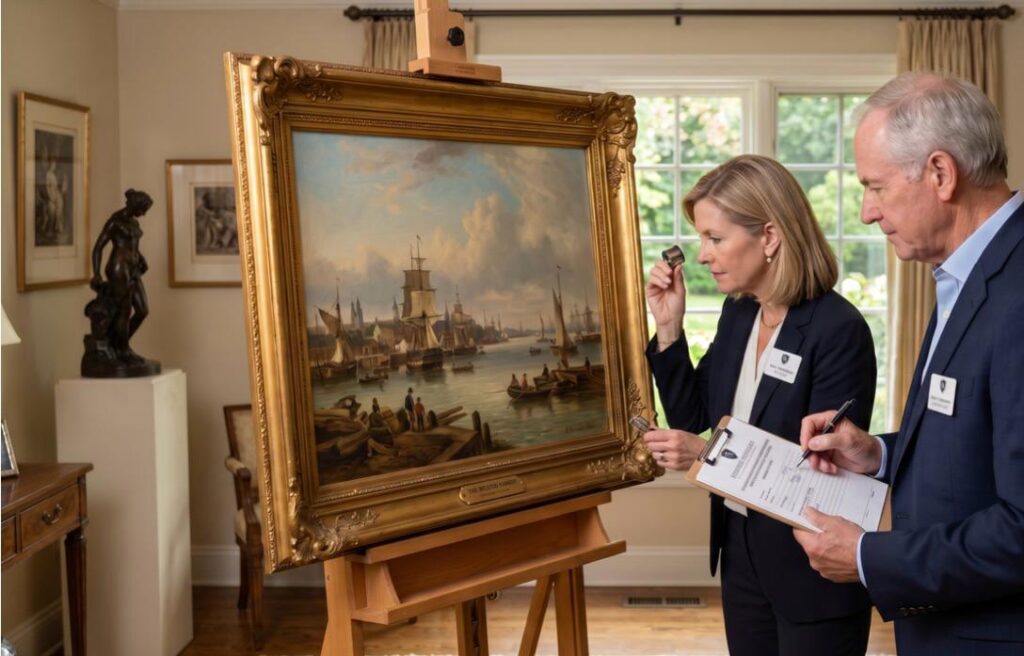
We conduct a thorough, on-site physical examination of the artwork, recording precise physical dimensions, analyzing condition states, and taking high-resolution reference photographs.
4. Identification & Research: Scholarly Verification.
We verify artist attribution, analyze the rarity of the medium, evaluate historical provenance, and confirm structural authenticity through database research.
5. Market Analysis: Retail Replacement Evaluation.
Our appraisers cross-reference active retail markets, gallery pricing, and relevant regional auction data to isolate the current replacement value.
6. Report Preparation: USPAP Compiling.
We compile all data into a formal, structured, USPAP-compliant appraisal report containing full descriptions and market justifications.
7. Delivery & Review: Final Briefing.
We deliver the completed document, walking you through the valuations and providing copies formatted for direct submission to your insurance underwriter.
8. Ongoing Updates: Portfolio Maintenance.
We track broader market shifts and schedule periodic reviews to keep your insurance policy perfectly aligned with fluctuating values.
Why Local Experience Matters in Michigan
Michigan collectors often have collections shaped by regional history and collecting patterns. We frequently encounter Detroit industry collections, mid-century modern furniture and art, automotive art, and eclectic estate collections accumulated over generations.
Understanding these local market nuances matters when valuing valuable artwork.
The Emotional Side of Art Ownership
Fine art is rarely just financial.
Many collections represent family history, travel memories, personal achievement, or generational legacy. Inherited artwork often carries emotional meaning that cannot be replaced.
That emotional connection is precisely why proper documentation matters.
When Should You Update an Appraisal?
A common recommendation is every five years, though some collections require more frequent review due to insurance requirements or market volatility.
You should strongly consider updating an appraisal if the art market has shifted significantly, you acquired additional artwork, your insurer requested updated documentation, or you are planning estate or trust updates.
Protecting Collections Before Problems Occur
The best time to obtain an insurance appraisal is before there is a loss, not after.
A professional appraisal provides accurate insurance coverage, clear records for heirs, support during claims, documentation for estate planning, and peace of mind for collectors.
Work With Independent Michigan Appraisers
Do not wait for a loss to discover your art collection is underinsured. Heritage Appraisals provides independent, USPAP-compliant fine art, jewelry, and antique appraisal services across Southeast Michigan, serving clients in Birmingham, Bloomfield Hills, Troy, Grosse Pointe, and the greater Detroit metropolitan area.
Begin Your Valuation: Submit Your Items Online
Main Office & Overview: Heritage Appraisals Michigan
Our Methodology: Learn About Our Appraisal Process
Frequently Asked Questions
Does standard homeowners’ insurance cover fine art?
Standard homeowners policies typically include personal property coverage, but they are capped by strict financial limits for specialized categories like fine art, jewelry, and antiques. To protect high-value pieces, you generally need to “schedule” them individually on an insurance rider, which requires a certified appraisal report to establish the correct replacement value.
What is the difference between Fair Market Value and Replacement Value?
Retail Replacement Value (RRV) is used for insurance purposes; it estimates the cost to purchase a similar item from a traditional retail source (like a premium gallery) in a reasonable amount of time. Fair Market Value (FMV) is typically used for IRS tax valuations, estate sales, or charitable donations; it reflects the price an asset would sell for on the open market between a willing buyer and a willing seller, often reflecting auction realized prices.
How do independent appraisers prevent conflicts of interest?
Independent appraisers do not buy, sell, or broker any of the items they evaluate. Because their fees are based on time or a flat project rate, never a percentage of the item’s value, they have no financial incentive to artificially inflate or deflate a valuation. This ensures the final report is completely objective and credible.
What credentials should a fine art appraiser hold?
A qualified fine art appraiser should have formal training from a recognized professional organization, such as the International Society of Appraisers (ISA) or the Appraisers Association of America (AAA). Furthermore, their reports must be fully compliant with the Uniform Standards of Professional Appraisal Practice (USPAP), which sets the legal framework for valuations in the United States.